Tuesday, March 22, 2011

Bing Encroaching on Google's Territory?

The search giant, Google, revolutionized the industry in 1997 when it came out with it's relatively new way of searching. Instead of finding the number of times a word appeared on the page, the engine would rank pages by the number of pages and the importance of those pages. Now, many companies have followed suit, including Yahoo!, Dogpile, and more recently, Bing.

Lately, Bing and Google have been having issues over the search material and how Bing comes by its search results. Google is claiming that Microsoft is pulling search results from Google and using them as their own. While there has been no mention of any legal action on Google's part, the questions is, would it be valid?

The questions comes down to this: first, is Microsoft taking search results from Google, and if so, does it go against copyright and trademark laws? Does Google have the rights to the results of its searches?

First off, the question of whether Microsoft is taking search results from Google is a question for Bing. However, if Microsoft is indeed using search results from Google, that would be an infringement on Google's trademark of PageRank, the software that generates all of Google's search results. They would be using the program without Google's permission to make a monetary gain. However, unless Google can prove that Microsoft is using its search results for Bing, Google really does not have a case for trademark infringement.

The bigger question is whether Google has the sole rights to the results of its searches. Some would argue that Google is providing those results for free use, which means that anyone could use those results for their own and there would be no legal complications. However, Google's software PageRank is producing those results. Google does have the rights to the software, but it gives the results to millions of people on a daily basis. While some companies, such as Microsoft, may believe that this information is up for grabs, it shouldn't be. These other search engine companies should be required to have their own software for producing search results.

Monday, March 21, 2011

Did Liebeck deserve to win in the coffee case against McDonalds?

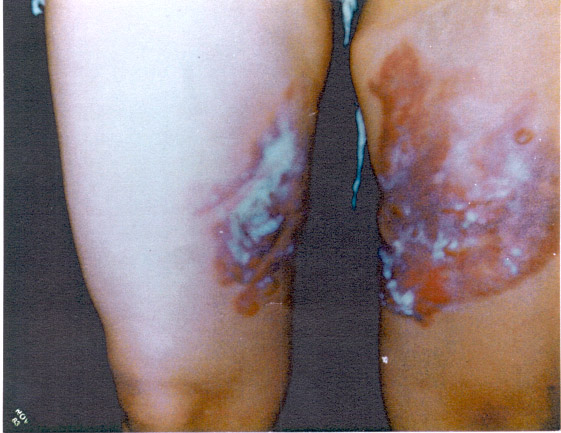
In the case Liebeck v. McDonalds, a 79 year old woman named Stella Liebeck was severely burned from a cup of hot coffee after spilling it in her waist area. Accompanying her was her grandson, Chris. When Chris pulled up to the curb and parked the car, Stella Libeck clumsily splilled the extremely hot cup of coffee while trying to put in cream. This sounds like something that Stella had control of the whole time, and it was her fault that she carelessly spilled. After McDonalds denied Libeck's demand of $20,000 for medical bills, which, however, was actually $10,000, she hired Texas Attorney Reed Morgan to take on McDonalds. So just how hot was this coffee that burned Ms. Liebeck?

After hearing McDonald's own quality assurance manager say that the coffee was usually 180-190 degrees, give and take a little, people started to question Mcdonalds. McDonalds then countered with the fact that people like their coffee hot and is requested by the consumers for the great tasting results, then questioned Ms. Liebeck', asking her if she really thought the 180 degree coffee was ready to drink. Since McDonalds lost the lawsuit against Stella Liebeck; McDonalds is now forced to warn their customers about the coffee temperature by labeling each individual cup with the words, caution hot.

In the end of it all Stella Liebeck was awarded $2.7 million in punitive damages based on its finding of reckless, malicious, or wanton conduct. When the jury heard that McDonalds income for coffee was around $1.34 million a day, they came to the conclusion that awarding Liebeck $2.7 million was reasonable. It went from Stella wanting $11,000 to her getting $2.7 million; in fact this trial will end all the other ones involving McDonald's coffee. What other ones are there? Before Stella's case, McDonalds had reported over 700 other people that have been victims of the extremely hot coffee. Many people look at this case as a frivolous lawsuit, meaning for Stella there was no chance of winning, but really she had a strong case that hundreds before her have tried to bring up. I believe that Stella Liebeck deserved to win this case, but any individual winning $2.7 million dollars has crossed the line, when really all she needed was around $11,000.

Friday, March 18, 2011

Toyota Sudden Acceleration


Everyone has heard about the latest Toyota recall. The sudden acceleration caused by improperly designed floor mats took the lives of 34 people. Although at first the Japanese car company refused to admit that the problem was in the manufacturing of the car, after hundreds of lawsuits, they admitted the issue. Right now 5.6 million vehicles in the U.S. have been recalled. According to a recent research Toyota accelerator recall lawsuits could cost $10 billion. A famous lawsuit was filed by two owners of a brand new Toyota-Seong Bae Choi and Chris Chan Park. They think that some of the blame for the sudden acceleration involves the electronics of the car, known as the ETCS-i. Lawyers for the plaintiffs in the Toyota case argue that Toyota has known about sudden unintended acceleration in its vehicles for nearly a decade The original design for the system included a feature that puts the engine into sleep mode in case of unintended acceleration. However, the company decided to sell the vehicles without the safety feature in 2001 resulting in many fatal accidents. Hiding the truth about floor mats and Failing to recall parts despite clear problems will put the company to a huge financial risk. The executives at Toyota knew about floor mat problems in 2008.On a recent conference they even bragged about saving 100 million by not recalling floor mats. These are some of the cars recalled by Toyota for faulty floor mats and sticky pedals: 2007-10 Camry, 2009-10 RAV4, 2009-10 Corolla, 2009-10 Matrix, 2005-10 Avalon, 2010 Highlander, 2007-10 Tundra, 2008-10 Sequoia. An earlier recall also involved Lexus models.


The invention by BMW- Smart Gas Pedals, may solve floor mat problem. The safety feature basically stops the engine when both the gas and brake pedal are pressed simultaneously. The feature only works when the vehicle is moving, so enthusiasts who want to launch the vehicle by revving the engine and holding down the brake will still be able to do so. A smart-pedal system is apparently something Toyota is considering as it attempts to deal with a safety problem involving floor mats that could cover millions of vehicles. But it would be costly, because they would have to pay for the BMW patent.


Solutions


· Remove Floor Mats


· Install Smart Pedals


· Changing Vehicle


Constitutionality of Obama Healthcare Plan

The Obama Healthcare Plan (the Patient Protection and Affordable Care Act or PPACA) is constitutional. The Act’s constitutionality has been challenged in many courts since its enactment. In many of those cases, the District Courts declared the PPACA unconstitutional. The Obama Healthcare Plan will cost many Americans their hard earned money, but precedent establishes that the Act is legal.In the first case to address the issue, the Act was found unconstitutional. The U.S. District Court for the Southern District of Virginia ruled that the individual mandate clause of the Act could be invalidated through a legal provision known as Section 1501. This provision states that a certain aspect of a law exceeds the constitutional boundaries of Congressional power. The individual mandate of the Healthcare Plan states that every American must have health insurance or they will face a penalty of a $625 or a collection of 2.5% of the individual’s salary, whichever is greater. Henry Hudson, the presiding judge, determined that the government’s defense that the individual mandate was protected under the Commerce Clause was inapplicable in this instance where U.S. citizens were forced to surrender their money to purchase something they may not want. Judge Hudson supported his ruling by explaining how that Act violated established Virginia law which prevented the state government from imposing penalties on individuals who had government commodities forced upon them. Judge Hudson ruled that only the individual mandate portion of the Act was unconstitutional, while the rest was legally acceptable. The second case in which the statute was found unconstitutional involved a coalition of 20 attorney generals, each representing their own state. They convened before Judge Roger Vinson of the U.S. District Court for the Northern District of Florida. Judge Vinson, like Judge Hudson, immediately found fault in the constitutionality of the individual mandate section of the Act. The defense raised the same arguments as in the Virginia suit. The ruling in Florida was much more disheartening for the PPACA. Judge Vinson ruled that the totality of the Healthcare Act was unconstitutional. Other cases were simultaneously fended off by the Obama Administration which in some instances resulted in findings that the Act is constitutional. Still other cases await ruling. Clearly, there is a split in the opinions of the various District Courts. The main question presented is what affect does the Act have on businesses and individuals? Many Americans are primarily opposed to the Act because the government is mandating that they purchase insurance. Businesses oppose the Act because of the increase in cost to their company’s insurance premiums. The Obama administration believes that by requiring multi-billion dollar insurance companies to make insurance affordable for all Americans, the best way for the insurance companies to continue to make money is to pass along the cost to corporate America and the wealthy. In the short term, this seems like a balancing act between the rich and the poor. In reality, the law’s requirement of providing affordable insurance to all Americans will create stability between the consumer and the insurance companies. The poor will have insurance to pay for their health care needs. They will not be dependent on Medicaid or government support. A new level of independence will be result. America will be healthier, and hopefully more jobs will be created. For those who complain that the Act is unconstitutional, they are incorrect. The Obama Healthcare Plan finds its precedent in a statute that dates back nearly eighty years. It is the very statute that the poor now rely on to pay for their healthcare needs. It is the same law that seniors rely on in their retirement. It was also vehemently opposed at the time of its enactment and challenged as unconstitutional. It is the Social Security Act. That ground-breaking statute from the last century set the precedent for the PPACA.The Social Security Act is now one of the longest standing government programs to provide economic safety and stability to those in need. It helped lift the country out of the Great Depression. The fundamental premise for that law is the same premise for this Act, and I am sure it will be cited as precedent by the Obama Administration when defending this Act before the United States Supreme Court.

Thursday, March 17, 2011

Body Scanners... with benefits


Our country has been dealing with terrorist’s attacks and extremely dangerous threats for our nation for over two decades. The 1980’s was a period of great turmoil for many countries including the U.S. In a span of four years several airplane attacks occurred, killing hundreds of people around the world.
A 747 explodes due to a bomb in a terrorist’s luggage over the North Atlantic killing more than 300 passengers.
● A 747 is bombed killing 270 passengers and crew members. This 747 was heading towards New York City.

● A French airliner explodes killing 170 people from 17 different countries.

Just to name a few of the numerous airplane casualties.
Back then, the government and the public did not react in the same way people react today। Draconian security measures were not implemented on U.S. airports, air traffic was not stalled, passengers’ personal items were not searched, and last but not least, people did not have to go through full x-ray body scanners and body pat downs by security officers in the airports.

How body scanners work
In 2010, a new security measure was introduced in U.S. airports; full x-ray body scanners. These scanners are able to detect any objects a passenger may have hidden on his/her body. If a potentially hazardous object is located, the security officers have the right to perform a body-search; essentially they have the right to pat down your body with out you being able to refuse that because then you would be even more suspicious.
The government claims that this security measure renders U.S. airports safer and less open to terrorist attacks. This might be true to an extent, however these scanners can not see through skin making it easy for terrorists to safely hide weapons and explosives in body cavities.

Use of Body Scanners

So since passengers and aircraft personnel are upset due to this security measure, which does not under any circumstance guarantee safe air traffic transportation throughout the United States, then why doesn’t the government recall these scanners? Well, to answer this question, we have to take into consideration the factors involved in the creation of body scanners.
The Transportation Security Administrator was planning on spending millions of dollars on body scanners. Three manufacturing companies with alleged governmental influences and connections were able to grasp this opportunity and be in charge of supplying U.S. airports with full body scanners.


The Manufactoring Companies
  • L-3 Communications, a major contractor with the Department of Homeland Security and employee of three different lobbying firms, has a 163 million dollar scanner contract.
  • Rapiscan- one of the company’s lobbyist is a former senior legislative aid, has a 173 million dollar naked-scanner contract.
  • The American Science and Engineering Company- this company’s lobbyists include a former deputy administrator for the TSA, and a former administrator assistant at TSA। AS&E was the first full-body scanner contractors.
Each scanner costs approximately $130,000 to $170,000. President Obama’s budget request for this year requires $88 million necessary to install 500 new scanners throughout U.S. airports.
Personally I thought that body scanners were an attempt to increase our national security against attacks and prevent any potential terrorist from entering an aircraft. Now, thanks to the blog TSA Spend Millions on Body Scanners, Sparkin Competition Among Suppliers , I know that these scanners have a larger significance in politics rather than in safety issues. So what I am left to understand is that no matter how unjust it is, no matter the frustration of passengers and aircraft staff, and no matter how time and manpower consuming this security plan is, it will continue to exist in U.S. airports because there will always be $88 million in play.
The ultimate question remains whether body scanners are for our safety or for helping out certain companies to increase their profits.

Wednesday, March 16, 2011

How Can Gay Marriage Benefit Our Economy?


Suppose that you were only a fiscally conservative person who cared about reducing the massive amount of debt, but you were also tied down to your very conservative christian morals. I would say that, respectfully, your fiscal beliefs and moral beliefs are at odds. There are many examples of this that I could go into, but the one that is most clear is how gay marriage is actually good for the economy. In 2009 there were around 2,077,000 marriages. And in 2009 the average cost of a marriage was $19,581. This means that in 2009, at the height of the recession,
marriage was a $40,669,737,000 industry. This is a massive number that will only go up because people will spend more on weddings when the economy gets better.

So imagine that we are in a world where it was just announced, nation-wide that same sex couples could get married. This would lead to an increase in marriages and therefore more people spending money. The government gets some of this money directly from the license (typically $30 - $40 depending on the state or country) and a percentage of the cost of the wedding because of taxes. If we assume that everything is getting taxed a flat 8% tax (some places are higher some are lower), this would mean that the government is getting around $1,600 per wedding. Estimates indicate that this could mean an additional $10 million per state. If we further assume that gay marriages and account for 1% of all marriages (though it would probably be more), this could mean that there would be an additional $400 million into the economy throughout the nation. Again if people are spending more and total marriages are happening, all of these numbers goes up. This could turn out to be a big help to the government and businesses.

This may happen pretty soon. Obama has recently told the Department of Justice to stop defending the Defense of Marriage Act (DOMA) because it violates the equal protection clause. This could mean a ripple effect through the nation with states giving full equal rights to same-sex couples. Boehner has defended DOMA basically saying that it is unconstitutional for the President to stop enforcing laws, especially those that have been on the books for 15 years. The House Bipartisan Legal Advisory Group was not bipartisan when it had a 3-2 vote (Republicans 3, Democrats 2) to litigate the defense of DOMA. Former Speaker Nancy Pelosi wrote this letter wondering how much litigation would cost and asked if it would help create jobs.

We certainly know that defending DOMA won't create jobs and will stunt economic growth.

Thursday, December 30, 2010

Discrimination In the Workplace

Do you have a job? Do you feel you have been discriminated against? Know your rights. Defend yourself with the law.

Federal law strictly prohibits discrimination in the workplace based on race, color, religion, sex, national origin, pregnant women, age, and people with disabilities. According to http://www.hrhero.com/topics/discrimination.html, these standards apply to employers when hiring, firing, demoting or promoting their employees.

Discrimination in the workplace occurs a lot more often than most people would believe. It happens in both the biggest and smallest of businesses. In fact, Abercrombie & Fitch, a popular retail store amongst teens, has been dealing with a number of discrimination cases recently. There has been one case, in particular, where the company was sued for racial discrimination. At one of the company's store locations in the Great Mall in Milpitas, California, an 18-year-old Muslim female showed up for a job interview wearing a hijab (religious head scarf) in March of 2008. Answering yes to the manager's question of whether it was necessary for her to wear the head scarf or not, he wrote down "not Abercrombie look" on her interview form. Following the interview, the girl was not hired. It is clear that this girl failed to be hired because she did not fall within Abercrombie's unwritten "Look Policy". This is outright racial discrimination. Title VII of the Civil Rights Act of 1964 mandates that such an act be illegal. In this case, it comes into play by prohibiting employers from classifying employees or job applicants based on race or a practice thereof (the head scarf). So, the U.S. Equal Employment Opportunity Commission (EEOC) filed suit against the company. The outcome of the case is yet to be determined, but I am hoping Abercrombie is found at fault for their discriminatory behavior and held to demanding consequences.

It's common knowledge that Abercrombie favors fit, young, attractive Caucasians to model their clothes and work in their stores. After being sued so many times over discrimination in their workplace, Abercrombie has made an effort to hire more of an ethnically diverse work force. Unfortunately, it has been found that the people who stray from their desired look are often required to stock merchandise in the back of the store where they can't be seen, or during the late evening hours when the number of customers filtering through the store is drastically fewer. As much as Abercrombie says they're making these changes, they're cutting all the corners and shying away from owning up to their responsibility as a company; obey the law.