Wednesday, October 28, 2009

Twittering in Sports

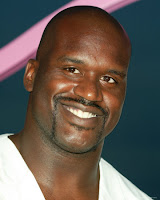
Twittering seems to be the new fad in professional athletes these days. Twitter is a micro-blogging tool or social network that asks the question "what are you doing?" Athletes from all different sports are joining in on the new fad. These athletes use twitter to make fans and other athletes aware of what they're doing and maybe their thoughts at that moment. Famous athletes such as Shaquille O'Neil, Danica Patrick, Chad Ochocinco, and many more participate in this new phenomena.
This new fad has also caused a lot of trouble for athletes, and has even forced organizations to have to put regulations on what they can "tweet" about. Athletes often get in trouble for making bad comments about fans, other players, organizations, and much more. NFL Linebacker for the Washington Redskins, Robert Henson got in some trouble for making comments on how the fans were "dim wits." Running back, Larry Johnson, is currently is some trouble for allegedly making a gay slur on his twitter account. The NBA, NFL, and even individual organizations are coming up with policies regarding these social networks. This YouTube video (which can't be embedded because the authors wouldn't allow it) does a good job explaining the background of Athletes and Twitter. I really think that twitter, although I have never used it, is a cool thing for fans to get to know their idols and favorite professional athletes. Twitter gives regular old people a chance to see that professional athletes are regular people,too and this social network gives fans a window into some of their everyday lives. I think that teams, organizations, and leagues making policies against the use of Twitter violates our freedom of speech. I don't think players should have the right to say slanderous things on Twitter about other players, coaches or organizations, but I do think they should be able to talk about their own personal lives within reason.


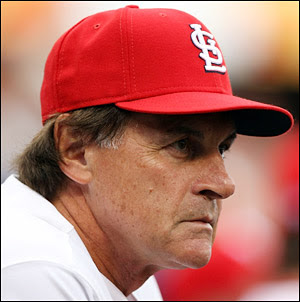
MLB's St. Louis Cardinals Manager Tony La Russa, sued Twitter over the summer for an fake Twitter page under his name. Apparently, this fake page brought up a drunk driving incident of his, as well as two dead Cardinal pitchers which he claims brought him emotional distress and hurt his reputation. Stanford Law professor Mark Lemley says “He’s basically repackaged a defamation suit to make it look like a trademark suit.” He says this because you cannot sue these social networking sites for defamation because of motions passed. There were rumors that Twitter made a settlement with La Russa, but a month later, it was found that La Russa dropped the suit.
I agree that Twitter can't be held responsible for imposter's and what people say on their networking site. They have policies for people to abide by. I can understand why La Russa might have been upset over this incident, but there isn't much Twitter could do to fix this besides terminate the fake page, which was done.
Overall, I think that Twitter is a good way for fans to get in touch with, and have a window into the everyday life of their favorite sports stars. Do organizations have the right to regulate their Twittering? I believe they do to some extent, but athletes should still be able to express themselves like everyone else does.

Tuesday, October 27, 2009

Nokia sues Apple for patent infingement


Nokia, the world's leading cell phone supplier and a leading handset provider, has recently filed a law suit against Apple for patent infringement. Nokia has been taking hits on its sales since the release of the iPhone the most popular smart-phone on the market. The Finland based handset giant has said that so far negotiations with apple have not been very successful. Nokia states that the charges of patent infringement stem from the fact that Nokia spent around 40-60 billion on research and development for its phones and that Apple has forgone this research. "By refusing to agree to appropriate terms for Nokia's intellectual property, Apple is attempting to get a free ride on the back of Nokia's innovation," said Ilkka Rahnasto, Nokia's vice president for legal and intellectual property at Nokia.

So what Nokia is saying is that Apple has stolen their ideas and patents and used them in their IPhone since release. Nokia though isn't asking for injunction which would halt the shipment and sale of the iPhone. Instead Nokia asks for an appropriate compensation for the past and future uses of their technology.

In the past couple years Apple has increased their share of smart phones sold from 3% to 13% while Nokia has dropped from 47% to 45%.

To me It seems odd that Nokia has taken this long to sue apple for patent infringement when the iPhone has been out for some time now. It feels like now that they realize that Apple is a threat they are trying to compete with them any way they can. But, it doesn't matter at all why it has taken Nokia so long to file a law suit the fact is if Apple has used technology patented by Nokia then Apple could be in truoble. What do you think?

Sunday, October 25, 2009

Photography Laws


I'm a third year photography student in GBN, but I always liked photography, even before I started taking photo classes. I love it so much that I'm sure that at some point in my life I will study it in college. But after reading about the issues that other photographers have faced....I must say that I'm nervous. Of course, the photographer mentioned in the link lives in the UK, but it can easily happen here, in the USA, as well. I have been downtown to take photographs and luckily I was never arrested or been stopped from taking a picture. Yes, there have been some...well, less than warm looks from random passer-by's that happen to be in my shot, but I was never told to stop taking pictures by a police officer.
Photography is an important aspect of today's society. Photographers should be allowed to do their job freely, without any unnecessary, unfair limitations.

There are a few laws that a photographer should be aware of:

1. The general rule in the United States is that anyone may take photographs of whatever they want when they are in a public place or places where they have permission to take photographs. Examples of places that are traditionally considered public are streets, sidewalks and parks. So basically, you can go to downtown Chicago and take pictures there without any worries.

2.Anyone can be photographed without their consent except when they are in places where they have a reasonable expectation of privacy such as dressing rooms, restrooms, medical facilities, and inside their homes. This was decided in the Nussenzweig v. DiCorcia case in 2005. DiCorcia was taking pictures in Time Square with an elaborate system of strobe lights, he was taking pictures from 20 feet away, collecting images of passers-by (including Nussenzweig) without their knowledge. He then exhibited these photographs and published them in a book. Nussenzweig felt that his privacy was violated, so he filed a lawsuit. The court ruled that DiCorcia's use of the picture was for artistic expression, and not commercial. So it was decided that a photographer could display, publish, and sell (at least in limited editions) street photography without the consent of the subjects of these photos.

3. You are allowed to take pictures of criminal activities,law enforcement officers, and accidents or fires. But you need to know that police officers have the right to keep you away from areas where you may disturb their activities or endanger their safety in some way. For example, if you are taking pictures of a car accident, you probably won't be allowed to get really up close to the scene, simply because you will probably interfere with the police officers work.

4. Private parties have no right to confiscate your film without a court order. If you are taking pictures of a store and the owner of that store comes up to you and asks you to give them your film, this can constitute as a criminal offense, such as theft, or coercion. It can also constitute a civil tort, such as conversion.

(Photo by Alex Turner)

Patent Lawsuits are making big money for Tivo


Tivo, which is a company that has over 146 patents on various DVR specialties, has been reaping in huge sums of money from lawsuits dealing with these patents. The most recent case was against Dish Network and won them over $200 million according to Business Week. Tivo has been winning many cases because of its trademark patents such as the "time warp" patent that allows the box to play one show while recording another. This patent has been a hot topic for Tivo to sue over because it is essential that most DVR's have this feature for them to work properly. Earlier Tivo won another huge lawsuit against EchoStar in 2006. The lawsuit was over whether EchoStar abused the patent that Tivo has allowing users rewind or fast forward capabilities during a love video. The court ruled in favor of Tivo and they received $87 million in damages according to Fox News. Tivo has made hug sums of money so far from these lawsuits and I doubt they will stop here.


I believe that Tivo shouldn't be abusing their patents to sue other companies. Tivo has been losing money and recently
Tivo reported a $2.9 million loss for the second quarter on $57.4 million in revenues. Tivo has been losing profits from not inventing any new technology and from fierce competition from other local cable companies and other big companies such as Dish Network. Their once inventive ideas are now being used in different ways and Tivo is struggling to keep their profits. Their major source of income is from their patent lawsuits, which they are abusing in my opinion. Their patents are for very vague features that are required for other companies to make DVR like devices. Tivo is just trying to make it so other companies can't make devices like this to eliminate the competition they have, which is greatly losing them money. The lawsuits are also making the company's stock prices soar, which can be seen here. I believe this gives stock buyer a misrepresentation of how Tivo is generating income because if they didn't win these lawsuits they would be performing very poorly as a corporation. Tivo is dieing out due to the competition and their lack of new ideas and the only thing holding them alive is their patent lawsuits.

Social Networking Cites Used For Background Checks

Social networking sites are some of the most popular online sites. Besides more and more high school and college students using these websites, many employers are beginning to use Facebook and MySpace as forms of checking backgrounds of potential employees. These networking sites can be used to find information about employees, or potential employees, which may affect hiring, firing, promotion, or other business related activities.

According to a survey done by the Ponemon Institute, 35 percent of hiring managers use the internet when performing background checks on job candidates, 23 percent on social networking sites. About one-third of these web searches lead to rejections. There was another survey done in the United Kingdom that polled over 950 business managers. This survey showed that almost a third of these people check social networking sites when looking for potential clients as well as to get information on existing employees. Out of those managers, about a quarter of them say what they have found has actually affected whether or not they decide to hire somebody. Drunken photos and rude comments that are posted by a person are the biggest causes for why a person may not be hired based on the social networking sites. Out of the people who previously said they did not use social networking sites as means for background checks, almost half of them said they would probably check their employees and potential employees this way in the future.

There was a case in which a woman’s Facebook page affected her as a job candidate. A man by the name of Van Allen, part of a company that helps find employees came for hospitals and clinics was planning on hiring a well-qualified, young, female psychiatrist. Though, her Facebook page made Allen think again about his decision to hire her. On this page, there were many pictures of her taking off her shirt at parties. Later, when Van Allen called her in order to get an explanation, it resulted in her not getting the job. This shows how job candidates who use networking sites have to be aware that what they post could affect their job. The images shown on Facebook may show a side of him/her that that person did not want his/her boss or coworkers to see, and therefore he/she should be careful with what he/she posts online.

Although many employers may seem too old to be considered part of the Facebook Generation, and are therefore not expected to be aware of what their employees post about them on the web, employers are increasingly using social networking sites when it comes to hiring. Many big corporations were previously checking job applicant’s background information. Though, these social networking sites allow smaller businesses to check their potential employees as well. The biggest users of the social networking sites are financial services firms and health care providers as a high level of honesty is needed in these jobs. The main target of the web research and online background checks is new college students since they use they use the social networking sites more than any other age group.

The main concern with looking online for information that may not come up in a job interview is the ethical side of it. There is little that can be done to prevent hiring managers from discriminating against the information on these websites. This may cause a problem as information such as religion that is posted on Facebook may be linked to discrimination in businesses. But, Facebook and other social networking sites have privacy policies that protect the sites. The policies deny responsibility by stating that posting on the site allows the networking site to access or release the user’s content for a purpose. When a company is planning on defending a discrimination claim, social networking sites may be used for evidence including a person’s friends, opinions, and views.

A business using social networking sites to find out more information on employees and potential employees is fair. Although many people may not be happy with the information that is found about them, that person should be aware of everything that is posted online about him/her. If there are inappropriate pictures of that person, he/she must have been somewhere in order for these pictures to be taken, and therefore that person should have prevented those pictures from going online if they did not want them to be seen. There are also privacy policies that protect the social networking sites. Although many people do not read them, these policies explain to people signing up for the sites that information about them may be used. Even though people may not like what is found out about them by means of social networking sites, it is fair if the sites are used for background checks involved with hiring, firing, and promotions in businesses.

Saturday, October 24, 2009

La-Z-Boying While Intoxicated

DUI (driving under the influence) or DWI(driving while intoxicated) are two of the most
commonly seen in
fract
ions by society. In most cases, DUI charges are pressed when a driver is behind the wheel of a car while intoxicated but 62-year-old Dennis Leroy Anderson went to extremes and pimped out
his favorite La-Z-Boy recliner and decided to take it for a joy-ride. In doing so, Anderson installed a lawnmower engine, wheels, headlights, a small steering wheel, a stereo, and cup-holders into his new source of transportation to see how his obscure invention matched up with
the rest.
It was all fun and games until eight or nine beers into the night. The 62-year-old Anderson chose to drive his motorized recliner to a local bar in Proctor, Minnesota where he backed into a parked vehicle at the nights conclusion and was arrested by local police for driving a La-Z-Boy while intoxi
cated. When police arrived at the scene in August 2008, they discovered Anderson's blood alcohol level to be at 0.29, exceeding the legal limit of .08 by three times. Anderson was not injured during the crash and told local officials that he was driving just fine until a woman jumped on the chair and knocked it off course. Keyboard Lounge own
er Roger Raymond denies serving Anderson and pleads that Anderson did not enter the Proctor bar all night.
Earlier this week, Dennis Leroy Anderson pleaded guilty to driving a vehicle while intoxicated. He was sentenced to 180 days in jail and two years of probation. The worst part of the deal for Anderson is that his invention was forfeited to police and auctioned off
along with other confiscated items.

The issue here: does La-Z-Boy have a right to sue Anderson. Anderson took a mainstream product and turned into a creation of his own. In doing this, Anderson wrongly brings attention upon the La-Z-Boy company and hurts the reputation of La-Z-Boy and their products of the future.

Thursday, October 22, 2009

How Private Are Hotel Rooms?


Hotel rooms might not be as private as we all think they are, and Erin Andrews learned the hard way. Andrews is a very successful ESPN reporter who was voted Playboy's 2009 sexiest sportscaster.

On September 4th 2009, Andrews was staying at the Nashville Marriott. A 47 year old insurance salesman named Michael David Barrett requested a room next to Ms. Andrews. The Mariott granted his request, setting Andrews up for a life changing experience. The two rooms were right next to each other at the end of the hall. They were in an alcove, meaning they were just about free to do whatever they wanted. According to sources, Andrew's peephole had been sawed off enough where a camera could film through it. That night, Barrett allegedly took videos as well as pictures of Andrews naked and in a towel. These pictures were then leaked on the internet. Barrett tried to sell the videos to a local celebrity website TMZ.com. Tmz refused, and there was evidence connecting the email used to send the pictures with Barrett's cell phone. There isn't any clear evidence as to why Barrett was so interested in Andrews, but it appeared as if this incident wasn't his only intended one. The Ramada Conference Center, a hotel in Milwaukee where Andrews was scheduled to stay at, had a very similarly modified peephole in Andrew's room. Barrett had also called 14 hotels where Andrews planned to stay in the future to reserve a room next to her. Federal prosecutors see him as a threat to other women having also found other naked pictures on the same email used to send the Andrew's videos around. Neither Barrett nor his lawyer will talk much about the incident, but Barrett's lawyer and old friend Rick Beuke stated that Barrett is, "as regular a guy as you'll ever meet- a great friend."

When news leaked that Barrett was been the person behind the stalking, Andrew's immediately pressed charges. Barrett was released on $4500 bond, and is required to wear an ankle monitoring bracelet. He is due at court on October 23rd for interstate stalking. These charges can face a major penalty of $250,000 and up to 5 years in jail. As of now, Barrett has lost his job as an insurance salesman and is waiting for his court hearing. There is no leaniance for interstate stalking, and Barrett is bound to face to consequences. Follow up on this case on October 23rd for the hearing.