Showing posts with label Leadership Philosophy 2-3B. Show all posts
Showing posts with label Leadership Philosophy 2-3B. Show all posts
Wednesday, January 15, 2014

Dagrizikos Leadership Philosophy: Five things that make a good leader

What makes a good leader? Is it someone who is bossy? Someone who leads autocratically? Someone who leads free-reign? Well, if someone asked me what qualities a good leader would possess I would think of 5 things: creativity, passion, honesty, good communication, and organization.
Creativity:
Creativity is so important in leadership. Anyone can go through the basic steps when it comes to leadership but it is the leader that executes the task just
I think that throughout the semester of Management and Leadership I have been pushed to think outside of the box. One specific activity was when we were broken into groups and told to make a bird house. Although I wasn’t allowed to participate in making the bird house, because I was an observer, I began to think of several different ways that I would build it. I think the biggest lesson was learned when we shared our birdhouses with the class. The lesson I learned connects with seeking to understand, then to be understood from 7 Habits. If we take a second to listen to our group members we could be pleasantly surprised with the ideas they come up with and even if you don’t like their ideas maybe one will spark for you!
Passion:
Have you ever worked in a group where there is one person that isn’t as interested in the task at hand as the rest of the group? For me, this is a difficult moment I face as a leader. At the beginning of this class I would probably get frustrated with this group member but as the class has progressed my leadership has too. I would say this connects to the leadership unit because you might not always be placed with group members who are as invested as you are. A way I learned you could boost motivation is with positive reinforcement. Things such as rewards and acknowledgement are things group members like to receive from their leaders. As a leader I also need to recognize who I am working with and what decision making style (ex. Autocratic, participative, free rein) I would use when I am working with my group. An example of when I have had to use problem solving is during my leadership impact project. Right off the bat I recognized the types of group members I had and decided to lead autocratically and sometimes a participative leadership style.
Communication:
This might be one of my favorite qualities a good leader possesses and I’m not just saying that because I love to talk. Communication is so important to good group dynamics and success because without it you can’t get your point across. This addresses seek first to understand then to be understood from 7 Habits because effective communication is when you learn to listen to your group members before you act. The beauty of communication is that it comes in so many forms. From email to social networking to face to face it seems like it is so hard to keep up. One of my favorite communication lessons that put me a little bit at ease was when we learned about short concise writing and how to send emails. I liked this because it taught me how to get my point across without having to be too lengthy. This is so important to being a good leader because many people don’t want to read a lengthy paragraph when you could have gotten the point across in a sentence or two. I have definitely started to integrate this lesson into my life by being the president of my church’s youth group where I have to update the group when we are having meetings via e-mail and Facebook.
Organization:
One of the main objectives to our leadership impact project was to leave a long lasting plan that future groups could work off of. I believe that the most successful legacies are the groups that left things organized. Not just organized in the sense that you have all your materials but also that your process is organized. In 7 Habits we learned about beginning with the end in mind which basically means to focus on your goal. I think that in the management unit I learned that, although it is tempting, skipping steps doesn’t lead to success but rather disorganization. A good leader knows that planning might be a bit tedious but once things are up and running the process is much smoother as opposed to one that is unorganized.
My Leadership Philosophy: Madison Cummings
My Leadership Philosophy
by: Madison Cummings
Leadership at School:
Although many students may get frustrated, annoyed, or just plain out hate their teachers, there is no denying that these teachers are leaders. Some teachers may not show it in the same way as others. We all have our favorite teachers that we look up to and they teach us more than just history or math. They prepare us for life. The leadership role that I have learned in school from not only my teachers but from my class mates as well would be to get involved and to really understand each other. When it comes to working in a group I always remain patient. Sometimes I need to take deep breathes, think about what needs to get done, and take control of all the emotions I am feeling and get what needs to get done. In my Management and Leadership class we had to do group projects. My group and I had a project about everyone embracing each others differences. It was called Join in the Community. The project taught me a lot about the type of leader I really am. I would say that I am most like the counselor. The counselor listens, gives advice, and prevents/solves problems. In our group I noticed that I was always the problem solver. When two people in the group had different ideas, they would look to me to decide on which one was better. But instead of just choosing which one was better, I tried to make both ideas work together so that we would all be happy. When there are discussions, I make sure that everyone has said what they needed to say, then I give my opinion or solution and try to bring everyone’s thoughts together. By being the counselor I don't just immediately take control and ignore every ones thoughts, I listen to everyone and see what works with what. Our best ideas for our project came from when we all contributed to one person's thought.
Leadership at Gymnastics:
I have been on GBN's Gymnastics team for all four years of my high school career. Many of those girls have become my best friends and my coach has been someone that I can look up to. Many of my leadership skills have come from my coach. Being patient is really the key to being a good leader. I have learned this through example. My coach has to deal with teenage girls and the only way he has been able to lead us is through patience. From my coach, I have learned to be patient with others as well. If you blow up on others, there is no way they are going to look up to you or respect you. If you don't have respect how do you expect to be a good leader. When I am in the gymnastics gym I like to forget about the stress of the whole day and put on my win-win attitude. Win-win is to look at the positive in what you are doing. I think of win-win in the gymnastics gym because if I go in with a bad attitude I won't do good and I might bring my teammates down, which would not make me a good leader. Patience with the sport has taught me to be patient when leading.
Leadership at Work:
I have been working since sophomore year.
 Since then I have started working at another job. I work at Yogen Fruz and as a lifeguard at an indoor and outdoor pool. Having two jobs (and occasionally babysitting) I have really learned a lot about myself as a leader. I know neither of these jobs are like a career, but they are the basis of understanding how to work with other people. The best leadership skill I have learned from both my jobs would be to always do what I am suppose to be doing from the people who lead us. The way I would lead would be in a participative way. Participative leading is when the leader presents problems to workers, defines the parameters, solicit input and then make decisions. My boss at Yogen Fruz has shown me that this way of leading is very successful. She will ask us things that she is thinking about, which helps give her different perspectives. At work I have started becoming a leader to my coworkers, by helping them out with things that would make their job easier for them. Or I try and make sure everyone is on schedule and that things are getting done. But I do all of this in a respectful way, because I don't want to offend anyone.
 Since then I have started working at another job. I work at Yogen Fruz and as a lifeguard at an indoor and outdoor pool. Having two jobs (and occasionally babysitting) I have really learned a lot about myself as a leader. I know neither of these jobs are like a career, but they are the basis of understanding how to work with other people. The best leadership skill I have learned from both my jobs would be to always do what I am suppose to be doing from the people who lead us. The way I would lead would be in a participative way. Participative leading is when the leader presents problems to workers, defines the parameters, solicit input and then make decisions. My boss at Yogen Fruz has shown me that this way of leading is very successful. She will ask us things that she is thinking about, which helps give her different perspectives. At work I have started becoming a leader to my coworkers, by helping them out with things that would make their job easier for them. Or I try and make sure everyone is on schedule and that things are getting done. But I do all of this in a respectful way, because I don't want to offend anyone.
Overall:
For just being 18 years old, I think I have learned a lot about being a leader in many different atmospheres. To sum up what my philosophy is, it is just to make sure you understand the people who are looking up to you. To really show them that you respect them and that you look to them to make things work as well. If you respect others then they will respect you. By gaining respect you gain people looking up to you and proving that you are a leader. Never look down on the negatives and always try to persevere. Even when things become stressful I always remain patient and calm, because that is the only way things are going to get done.
Shane Nediyakalayil: Follow the Leader
In elementary school, we each were assigned a job for the week. These jobs included board eraser, snack-passer, hall-monitor, and many more. However, there was one job that I loved the most, and that was line leader. I loved when it was my turn to be in front and leading everyone to the lunchroom or the gym. However, this meant I hated when it wasn't my turn. "Follow the leader" was a game I never enjoyed, but this all changed once I grew older. Today, I still enjoy playing that game, but now the rules are a little different. Instead of being in a line and following people to different places, I now follow the leadership styles of different people I admire. I have my BIG 3 leaders who I look to for advice and through them have I become shaped. So my leadership style is a mixture of these people, and with their help have I created my own philosophy which is:
My leadership philosophy is still in the making, and I know it will be hard at times to follow, but classes like Leadership and Management will help to strengthen it. Learning the components of a leader and what it really is are the first steps. Learning even the different types such as autocratic, participative, and free-rein have really opened my eyes to the different leaders around me, and to myself. These skills and experiences I have gained will help me grow as a leader throughout life.
Work hard to inspire others and yourself

My first and most influential leader is my dad. Ever since I was young, I remember him always working and doing something to improve either work or the family. Before I read 7 Habits, my dad was the one to teach me the importance of being proactive. It about acting instead of reacting which is like getting ahead instead of trying to catch up. I still need to improve on the skill in many ways, but I know this class has helped me strengthen that habit.
 |
| http://dimland.blogspot.com/2011/02/dimland-radio-2-5-11-show-notes.html |
Bill Gates is another leader I look up to. He dropped out of college, but never stopped reaching for success. When we learned about the habit "Think win-win", I thought of Bill Gates. A famous quote of his that I really like is "People don't follow you because you take from them; they follow you because you give to them." This quote really shows the importance of the success of everyone, and not just you. A solution that benefits everyone is more beneficial in the long run.
 |
| http://commons.wikimedia.org/wiki/File:Michael-jordan-dunk.jpg |

Michael Jordan has always been someone people look up to, including myself. A lot of people like him because of his basketball ability and money. I look to him for a different reason. Just like my other favorite leaders, Jordan was someone who worked extremely hard. He stands out in the fact that he resembles one of my favorite habits, which is "Begin with the end in mind." Jordan always looked at the long run, which was a championship under his name. He looked at the big picture, something all leaders do.
My leadership philosophy is still in the making, and I know it will be hard at times to follow, but classes like Leadership and Management will help to strengthen it. Learning the components of a leader and what it really is are the first steps. Learning even the different types such as autocratic, participative, and free-rein have really opened my eyes to the different leaders around me, and to myself. These skills and experiences I have gained will help me grow as a leader throughout life.
Tuesday, January 14, 2014
Lauscher Leadership Philosophy: Stay Focused and Be Proactive
Stay Focused and Be Proactive

A good example of a proactive leader is the team captain on a varsity basketball team. Not only does the captain have to assert themselves as leader, but they have to be very proactive, and always have a win-win attitude. The team captain has the authority to assert negative and positive leadership acts upon his/her team. If a player is trying really hard, and getting better everyday, the team captain should be there to enforce some positive feedback on his/her efforts. If a player is slacking, and not getting any better, the captain needs to use a negative leadership style to force the player to work harder. In fact, a captain should have all seven habits from the book we read in class The 7 Habits of Highly Effective Teens.

What have I learned?
This semester in Management and Leadership was very informative. I used to be a follower, but now I want to be the leader in every project I contribute in. Someday, I want to be an engineer, and I want to assert my ideas and opinions to put them to use. I found this class very helpful, learning the "7 Habits", and other attributes that help with leadership. I now want to be a very focused and proactive leader, that always has the end in mind.
Interview Activity
During the Interview Activity I saw and heard a lot of the things we learned in class, be applied to real life. I interviewed my Father and he had read 7 Highly of Effective People when he was younger, so he knew a lot about leadership. During this activity was when I realized that it is so much better to be a leader than a follower. The things my Father was telling me about leadership, and how it applied to real life, just stuck with me, and now I've wanted to lead more than ever. He brought up two major points, to stay focused on the task at hand, and to be proactive, thus referring back to my Leadership Philosophy. That is the type of leader I want to be someday, and using all of the things I've learned through the Management and Leadership course, it has become very achievable.
-Jordan Lauscher
Julian Spivak's Leadership Philosophy
Leadership Philosophy
Intro:
When we talk about any organization, which is headed by a man, we understand that his thoughts and actions are essential at all levels of governance. Good managers, charismatic and responsible, we used to call "leaders" - people who lead the way, or rather, your thoughts, followers. Brilliant leaders are called "visionaries" because such people can not only find like-minded people, but also to explain to them the meaning of movement.

The Dream of Leadership
The dream is to energize everyone (followers) to work in the same direction to achieve a goal.

Positive Motivation
Methods:
- Be a source of "positive" energy.
- Inspire people of confidence and optimism in the future.
- By giving people a sense of clarity.
- Create an emotional climate that encourages innovation, loyalty and trust.
- Incentive
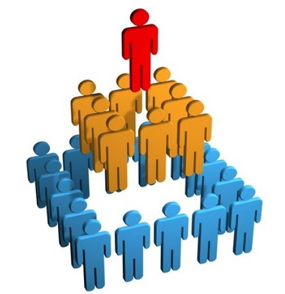
The people that are being led always look up to some leader to get the incentive that do need.
Planning and Problem Solving
The Leader's job starts with planning and decision-making. The type of decision-making style, I would use for my leadership philosophy to achieve goals would be Participative (Democratic). I would meet with my followers to discuss how we have to achieve a target. Presenting problems to the workers or your followers is a very good thing, so they can be aware of the state of interest. They will be able to think of ideas how to fix problems that the group is facing.
Thus, Leaders play a central role in determining the overall emotional climate in the environments, because people are paying close attention to the leader, even his implicit emotional state can have a big impact. Leaders who are open and able to express their positive feelings attract their subordinates and increase the group's success. I am thankful I took this class to sharpen my leadership skills that will be used for the future in my life.
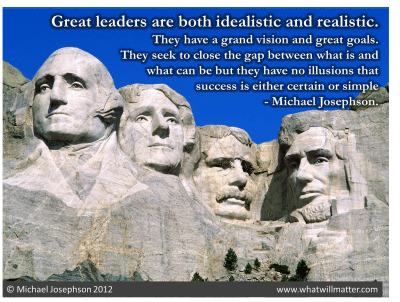
What Makes a Good Leader?
"Sometimes you can't see yourself clearly until you see yourself through the eyes of others."- Ellen Degeneres

You might be asking yourself, "Why aren't the words highlighted?" Well let me tell you. Everyone's leadership philosophy is different than the next person's. Deciding what is important to you as a leader doesn't happen overnight. I had to search within myself and those around me to figure out what really matters to me. After many months of contemplation, I've realized what characteristics I find necessary in a leader. Through reading the book 7 Habits of Highly Effective Teens, I learned what matters to me as a leader.

Now you may be thinking to yourself, "These aren't the same things I find important as a leader." That's completely okay. Everyone's leadership philosophy is different, and that doesn't mean they are wrong. If there are things you think need to be added into my word search, then keep searching. In the meantime, I will too, and who knows? Maybe we can both learn something new by doing so. The words that I chose to be in my word search are important to me currently. As I grow overtime, I will be able to learn more about my leadership philosophy throughout the experiences that I will encounter.
What's Important to me?
Planning
Planning is an important part of completing a task. Working in a group can be difficult at times, since everyone has different personalities. By planning ahead, everyone involved will know what is expected of them and know what the end result should look like. It is important to take into account the time frame you are working with and make sure your ideas are practical. It is good to push yourself to your limits, but only if it is something you will actually be able to achieve. Striving for something more than you think is possible is when you get the best results, but only if you will be able to execute your plans.
 |
Organizing
Being organized for anything in life contributes to your success. It is especially important for a leader to be organized because it will help the group function better as a whole. Being organized helps reduce stress and allows you to work more efficiently. Time management is an important part of being a leader, and being organized is essential.
 |
Implementing
 |
Put First Things First
As a leader, it is important to put first things first. Prioritizing what needs to be done right away is a good way to go about doing this. Some things can wait until later on in the process and it is important not to jump ahead of yourself. Procrastination is something to avoid, because in order to see the results you want, you need to put forth full effort. Knowing what is most important will help lead you to success. It can be difficult to decide what is most important, but you need to think about what is crucial to the task at hand.
 |
| salmanahsan.com |
Interview Activity
By doing this activity, I learned how to interview someone for a job. Something that stood out to me was that people on an interview committee do not always agree on what you are looking for in your employee. It is important to come to some sort of agreement before bringing in the candidates. This way, everyone is on the same page which is beneficial to everyone in the process. Interviewing can be a big part of leadership, so these are skills I will take with me wherever I go in my future.
 |
 |
Interviewing a Leader
As a leader, I found this activity really interesting. I interviewed my dad and I learned a lot about his leadership philosophy and it was very thought provoking. One thing that stood out to me the most is that he uses a different leadership style based on the situation he is dealing with. Typically I use a democratic leadership style because I feel like everyone in a group is essential and should have a say in what is happening. On the other hand, if a decision cannot be reached, I would step up and do what I think is best for the group. This activity really highlighted the fact that it is not black and white, it depends on the situation you are in.
 |
"I work really hard at trying to see the big picture and not getting stuck in ego. I believe we're all put on this planet for a purpose, and we all have a different purpose... When you connect with that love and that compassion, that's when everything unfolds."- Ellen Degeneres
 |
Teagan Murray's Leadership Philosophy
Teagan Murray's Leadership Philosophy
 7 Habits of Highly Effective Teens: During this book, I thought a lot about myself and in what ways I related to each of the habits. I found out that there are a lot of things I could be doing differently to be a more effective me. But, I realized, nothing's ever going to be perfect. Not myself, not my leadership style, nothing. This is why being able to problem solve when things go wrong and coming up with different plans is so important. When you're leading a group project, an event, etc, there are going to be flaws and things are going to go wrong. However, I believe the best way to overcome these challenges, is to know how to problem solve. Reading 7 habits helped me understand that usually things don't run perfectly, and that that's ok. I believe the best leaders are the ones who struggle through problems but still come out successful.
 Communication Unit: For example, in my leadership project, we weren't able to have choir come and perform for us. There were a lot of better ways that my group and I could have problem solved in that situation. For starters I think it is important to be a good and effective listener. it's important to understand what the problem is in order to fix it. After all, my solutions contain what I have learned by listening. When we found out we weren't going to be able to have choir perform, we could've suggested a different date, a different time, asked what was most conveniant for them, anything else. Instead, we did nothing and accepted the fact that they couldn't come. We could've even asked a different musical group to come, such as band. Also, it's critical that you communicate with your group members as well. Listening plays a huge role in communication and in problem solving. Your group members might have really good ideas on what to do to solve the problem so it's important that you listen to their suggestions.
 Leadership Unit: A huge part of leadership is being able to make decisions. When you encounter a problem, you need to be able to decide what you want to do about, and how you're going to do it. You can't be iffy and just "go with the flow". You need a plan with the ability to execute that plan. But, the way you learn how to lead people and make these big decisions is by leading by example. The best leaders know what they know from their previous leaders. They listened and learned from their superiors how to become better at management, communication, and over-all better leaders. Leadership is so much more than being able to be in charge and tell people what to do. It involves problem solving skills, communication and listening skills, and a lot more. Alot of the time it involves experience which is what I talked about earlier, leading by example. Leadership skills are difficult to have sometimes and I believe everyone has their strong suits and not so strong suits when it comes to leading but these qualities are what make good leaders and this is my leadership philosophy.
Who is a leader?
You say you aren't a leader? I would say RETHINK! A leader is not a specific person with a title! Everybody is a leader! Some lead big groups of people, some lead small groups and some just lead themselves. In any case everybody is a leader. Remember! The number of people you lead doesn't define how good of a leader you are.
I would say there are tons of qualities that make up a good leader, but then, no one's perfect. Every person has some qualities through which he/she leads and then some weaknesses. Weakness isn't a bad thing. It's just a natural thing. But then a good leader is the one who overcomes these weaknesses and keeps striving for improvement. While it is not even necessary that a certain quality be good or bad, it could just be different, because there are many different leadership styles.
 A few months ago, I was reading a book by Sean Covey called the "Seven Habits of Highly effective teens." It was a book that made me ponder over myself and my leadership philosophy. That book mentioned seven habits that if a person acquires those, he/she would almost be a perfect leader. While the book mentioned habits like being proactive, prioritizing, synergizing and some others, there was one that I felt was the most important for a leader who is leading a group, and that was 'seek first to understand, then to be understood'. I feel like until you don't listen and respect the people you are leading, they also wouldn't care to respect and listen to you, and that's not the sign of a good leader. So being a good leader would want you to listen the people you are leading, take ideas from them, and take them into consideration while making decisions. Though in certain situations it's not possible to take everybody's idea into consideration, and so making a good decision on behalf of your team is also a very important and good quality of a leader.
 |
| *Picture from internet |
In the end I would just remind you again, there is no one particular leader who is the best, everybody can be excellent leaders depending on how you use your leadership styles and philosophy. The qualities of a leader that I mentioned were just a few prominent ones, other than this there is so much more in every person and every leader.
Julia Braude's Leadership Philosophy
Put First Things First:
To become a more balanced leader, I have to recognize that not doing everything that comes along is okay. There's no need to overbook your schedule. Putting first things first means that I am okay with saying no if there is too much on my plate. Being a leader is about prioritizing and seeing what matters rather than little things here or there.
 |
| Image via: |
Sharpen the Saw
Keeping your personal self sharp so that you can become a better leader.
Keeping your personal self sharp so that you can become a better leader.


Positive Motivation:
Positive motivation is when the person expects a certain reward. I would use positive motivation because I know that I am personally motivated by rewards. Even if it is just being acknowledged for doing something good, it makes employees motivated. I realize that everyone is motivated by different things, so it is important build a personal relationship. This will help you know what is important to them, and will be able to positively motivate them by using what they strive for as an individual. Being positive is one of the aspects that I strive for when being a leader. I feel that it is important to encourage employment development through creation of high job satisfaction.
Positive motivation is when the person expects a certain reward. I would use positive motivation because I know that I am personally motivated by rewards. Even if it is just being acknowledged for doing something good, it makes employees motivated. I realize that everyone is motivated by different things, so it is important build a personal relationship. This will help you know what is important to them, and will be able to positively motivate them by using what they strive for as an individual. Being positive is one of the aspects that I strive for when being a leader. I feel that it is important to encourage employment development through creation of high job satisfaction.
Negative Motivation:
On the other hand I would use negative motivation in certain scenarios, because employees need to know there will be consequences if their performance does not meet my expectations. I feel that negative motivation will help employees become better at their jobs.
In Daniel Pink's Ted Talk he talks about the puzzling topic of both positive and negative motivation. He explains different scenarios where it is best to use different methods of motivation.
In Daniel Pink's Ted Talk he talks about the puzzling topic of both positive and negative motivation. He explains different scenarios where it is best to use different methods of motivation.
Decision-making Styles:
Interview Activity:
During this activity, I learned how to effectively interview someone for a position. Something that stood out to me was that each person on the interviewing committee had different expectations for what they wanted for the new employee. Even though it took us a little longer to figure out who we wanted to hire, everyone had a voice and we all compromised at the end.

Joanne's Leadership Philosophy
Leadership Philosophy
"Speak softly and carry a big stick; you will go far. "
Theodore Roosevelt
From Nothing to Something
In the beginning of leadership class, I understood nothing about leadership materials. Also I was scared of learning more because it was difficult for me to have those easy seven habits from 7 Habits book. The first three habits of seven habits were probably the most hard ones for me to become flexible. However, because I learned it with some struggles, it remains in my mind the most.
 Turning Point

Leaders always look high esteemed, are very proud of themselves, and having a lot of respects from others. I always observed them being a proactive, and wanted to become a person like them. The reason why I call them as leaders is because they follow other people respectively, always be positive, make decisions carefully, and always be responsible of what he/she does and says. Thinking of win-win kind of goes together with being proactive. Win-win is the most peaceful way for people to have in a relationship because it is such as a nice way for both people to win without any fights. There will be some sacrifice actions for leaders to take but by little bit of negotiating, they will get whatever they need peacefully. Therefore, this is what crucial leaders do. I will become a leader who has those leadership characteristic. They always make situation peaceful. Those characteristics of leaders are what I want to contain to become a leader that I think of.
Leadership
In leadership unit, I found some my leadership philosophy. Leaders motivate other people by positive attitudes and are participative leaders. I always dreamed of a leader to be cooperatively work with other people without being strict or being a dictator. Also I want to motivate other people by helping them out. I saw most leaders on speech. From those inspirational speeches, they were very motivative to me and made me to grow as a leader like that.
Interviewing a leader
We learn to be a leader by observing many leaders from previous ones. We are all not born to be leaders. We all learn and gain leadership characteristics in my opinion. Therefore, I learned some leadership characteristics from one of leaders in school, Ms. Eller. She is my English teacher and I like how she leads my class. From her interview, I realized that she tries to be lead by, and always try to be responsible on what she says because her voice is not only voice in the class to be heard. Her leadership philosophy is giving people tools to solve problems in much flexible ways, and giving opportunities to students to lead themselves well. She strives to be fun, fair and friendly to be a leader. She also has a conviction but open minded.
Reflection
From her leadership styles, I felt she was all true and right. I forgot about the fairness that all leaders should have. Because for me, I always thought the responsibility was way important. After her interview, I became more friendly to other people and be fair to everyone. I applied some leadership styles outside of school. In my church, I was very shy and not talking to much people in the beginning. Since I got changed, I went up to people first and start to talk and hang out with them. Now, I can’t wait to go to church on Sundays. Probably, I had a too strong conviction that that will not be changed easily. I always thought I could not be friends with people in my church. Being a flexible person brought me a result of a whole different story. Lastly, I had been observed some strong, and strict leaders at school, and any other places. Because I always hated the way they lead the class, I decided not to become a leader like that, and that I always hated of. If I keep my promises in this page, I will become such a successful and friendly leader and I want to be that leader.
Monday, January 13, 2014
Leve Leadership Philosophy: What kind of leader am I going to be?
Kate Leve
What kind of leader am I going to be?
- To figure out what kind of leader I am going to be I have to look at what type of person I am, as well as what I’ve learned during my time in my Management and Leadership class.
My Center-
 During this semester I have been discovering what my center is. In order to discover my center I took at look at my principles and what is important to me. My principles include kindness, helpfulness, nurturing, hardworking, and understanding. Being as kind as possible to people is what is important to me. I understand sometimes one needs to be tough but like my grandmother always use to say “everyone wears an invisible sign around their necks saying I want to be liked”. I love to put a smile on peoples faces and making them feel liked and important. From looking at my principles, what is important to me, and remembering my grandmother’s advice, I realized my center is kindness. I want to be to others and the world a helping, understanding, loving hand. From learning what my center is I know I am going to be a kind leader who seeks to understand, then to be understood.
 7 Habits-
I have learned many things during this class but the things that I will apply to what type of leader I will be include the following from 7 habits: being proactive, think win-win, and synergize. While reading "The 7 habits of highly effective teens" by Sean Covey I learned the differences between reactive and proactive people. I also learned that I am a proactive person. Sean Covey explained that "Reactive people make choices based on impulse... Proactive people make choices based on values" (49). I am a very logical person and don't tend to do things on impulse. I try to stay calm and cool in difficult situations. For these reasons I am a proactive person and will be a proactive leader. I think it is important for a leader to be proactive. When you are leading a group of people it is key to stay calm and deal with situations with a clear and collected head. I also think it is important to think win-win when you are a leader and I plan on thinking this way when I am a leader. I try to think win-win when a difficult situation comes up because I believe staying positive is important. I am going to be a leader who thinks win-win in order to keep a good atmosphere as well as help everyone succeed. The last thing I learned from 7 habits that will translate to what kind of leader I am going to be is Synergize. Synergy is when two or more people work together to create a better solution than either could alone. I enjoy working with others and know in some situations the more people, the better the outcome. It is for these reasons that I will become a leader who uses synergy and works with others to create better solutions.
Decision Making Styles-
 There are three decision making styles that we learned during our Leadership unit that helped me decide what kind of leader I am going to be. These three styles are autocratic, participative, an free-rein. A free-rein leader is someone who encourages individual or group to function independently. I think a leader should give their input to help lead others and by doing this you will avoid confusing the group of people you are leading. I am a hands on type of person and I don't like to leave everything up to others in order to get something done. I like to be apart of the process and give my input. It is for these reasons that I will not be a free-rein leader. During the birdhouse activity my group had a autocratic leader. An autocratic leader is a sole decision maker and gets no input from others. During the activity I saw how this leadership style didn't work very well because no one was able to give their input, even if it could have been beneficial to the group. Because of this I think people should avoid being a autocratic leader and why I am going to be a participative leader. A participative leader is a more democratic leader. Someone who presents problems or task to workers but also gives their own input and helps make decisions. As I mentioned earlier, I am a more hands on person but at the same time I am not a control freak and can let others take some control. This is exactly what a participative leader is like. I know from learning about these three decision making styles that I am going to be a participative leader.
Putting the pieces together-
 After this semester in Management and Leadership and finding out what my center is I now know what kind of leader I will be as well as what my leadership philosophy is. I am going to be a firm but fair leader. I will keep true to my kindness center and try my best to work well with others and make the people I lead feel comfortable and important. I will remain a proactive person and always try to think win-win. I will also remember synergy and remember how beneficial it can be to work with others. I will be a participative leader who works with people to succeed in completing tasks. Who I am going to be as a leader all comes back to what my leadership philosophy. My philosophy is that a leader should be fair and willing to work with others. They should stay open-minded as well as keep a positive attitude especially during difficult situations. And lastly a leader should remember their center and stay true to it.

Putting the pieces together-
 After this semester in Management and Leadership and finding out what my center is I now know what kind of leader I will be as well as what my leadership philosophy is. I am going to be a firm but fair leader. I will keep true to my kindness center and try my best to work well with others and make the people I lead feel comfortable and important. I will remain a proactive person and always try to think win-win. I will also remember synergy and remember how beneficial it can be to work with others. I will be a participative leader who works with people to succeed in completing tasks. Who I am going to be as a leader all comes back to what my leadership philosophy. My philosophy is that a leader should be fair and willing to work with others. They should stay open-minded as well as keep a positive attitude especially during difficult situations. And lastly a leader should remember their center and stay true to it.
Subscribe to:
Posts (Atom)