Showing posts with label Leadership Philosophy 4-5A. Show all posts

Monday, January 19, 2015

The Sublime Craft of a Leader

Thousands of leadership philosophies exist out there, but what deems a person a leader is his/her ability to possess different ideologies which differ from the others. The mindset I have maintained throughout my life is one that can be described a
s very disputed. However, a large portion of the values I believe that are discovered in leaders are agreeable. Before leadership specification are discussed, it ought to be known that one obtains the prestige of a leader at the end of the walkway. Those that acquire the status of a leader have developed the skills, attributes, and overall personality along the journey through adolescence and adulthood with the assistance of experiences. It is evident that experience is what plays a major role in shaping the distinguished qualities of a being. Included in my philosophy is that success is never achieved without failure. Encountering adversity throughout life tremendously influences the outcome of a person’s contributions.

The Five Emphatic Stepping Stones:


  • Being Proactive: A leader familiarizes himself/herself with the techniques necessary to excel in whatever task is being executed at that moment. He/she qualifies as being proactive if time management, productivity, and realization is performed regularly. On the contrary, reactivity is observed as an indictment to the human mind and should not be viewed as a benefit to social interactions in life or for personal reasons.


  • Consciousness: A leader becomes aware of the variations of authority when in a work environment. In such a situation, it is then where management skills are essential. He/she needs to utilize the appropriate gesture based on the given scenario. The styles: autocratic(dictatorial), participative(democratic), and free-rein(laissez-faire) all have something in common. They necessitate a leader at head which provides direction, demonstration, and assurance of a favorable outcome. He/she is not ignorant, but very knowledgeable on how to apply the existing forms of governance.


  • Identification: A leader is fully capable of eliminating the peculiarities in a certain position. He/she has the experience and mentality necessary to acknowledge flaws of the system in the status quo. While perfecting proactiveness, reactiveness is also utilized but only under a “must” circumstance.


  • Mutual Respect/Trust: A leader is one that has tailored the present belief to granting respect in order to receive it. This idea was very much influenced by a certain candidate attempting to obtain the Assistant Dean position. Courtesy is the single most important aspect when it narrows down to communication because institutes the premise of relationships. From a broad perspective, this may be seen as a component of minimal significance. However, it is an integral part of maintaining the management and leadership quality.


  • Beginning with the End in Mind: A leader will continuously have the disposition to prioritize the more valuable things in life such as family. In addition to that, they also tend to forecast the future which ultimately results in establishing goals to be accomplished. With the inspiration drawn from The 7 Habits of Highly Effective Teens, I was able to conclude that pre-planning, thinking long-term, and actualizing your hopes/aspirations are absolutely imperative and the underlying essentialities.


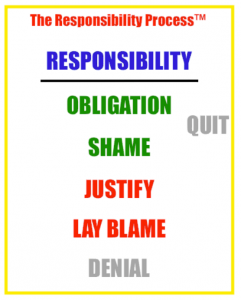
Also included in my leadership philosophy is the responsibility aspect of the brilliance:

Sunday, January 18, 2015

Matt S. Leadership Philosophy


A person's leadership philosophy is what defines how well they run a group of people. After taking a semester class in Leadership and Management, I have learned several new ideas that have changed the shape of my leadership philosophy. By combining these all together, my thoughts on leading can be broken down into these steps, ranked by importance.

  1. Recognize who you are leading. Before you begin to lead, I think that understanding who you are trying to lead is of utmost importance. Understanding this concept helps me understand what type of leadership style to incorporate. During my semester with Management and Leadership, I learned that there are many styles which one can choose from. For example, you could use autocratic techniques, or more democratic techniques. Using either one should be based upon what is best for who you are leading, not who you are as a person. Perhaps in leading a group of younger children I would use a more autocratic approach, whereas with older, more mature people, I would use a more democratic approach. Therefore, I believe recognizing and understanding what type of people you are going to lead is the first essential step I take when leading.
  2. Part of the curriculum in this class was reading The 7 Habits for Highly Effective Teens. Many of the topics mentioned in the book impacted my philosophy, but one which really stood out to me was “begin with the end in mind”. What this means to me in terms of leading is that when you begin leading a group of people, you must make clear what the end goal is. Getting everyone on the same page in terms of what there is to accomplish is in my opinion the next most important thing to do as a leader. My favorite quote about leadership from Antoine de Saint-Exupery channels this idea by saying, “If you want to be a ship, don’t drum up people to collect wood and don’t assign them tasks and work, but rather teach them to long of the endless immensity of the sea”. This channels the thought of beginning with the end in mind and also touches upon the thought that when leading, it is important to be a leader, rather than a boss. A boss would assign people to collect wood for the ship, and create the sails, but a leader inspires them. A leader motivates them for the end goal. Once the followers become focused on the end reward, they won’t need someone to assign them tasks. They will do them willingly. I believe a good leader always has the end product in mind, and is always doing their best to inspire and motivate others to achieve it. 
  3. The next most important part of leading for me is the planning process. Once I figure out who I am leading and what the end goal is, the planning is crucial to the execution of the goal. During our unit on management functions, we went over how the planning process works. From this I have taken away that it is important to start the plan as broad and general, and then narrow specific tasks down further in the planning process with dates and specific details. I also learned that it is good for plans to be compatible and flexible, because odds are that things don’t always go exactly according to plan.
  4. The next most important part of my leadership philosophy is the behavior used during the day to day process of leading. Simply put, how your followers perceive you and how you behave around them is essential. My key idea here is to be who you want your followers to be. I always want to look positive and motivated around those I’m leading so that they will sense my motivation to accomplish our goal. I believe that if I behave like this, the group I lead will place their trust in me, which is good. It is also good to show faith and perseverance in the goal, especially when you hit roadblocks. If your group sees that you’re not giving up, then they won’t either.
  5. In our management functions unit we also touched upon the idea of the organizational environment. In order for the task at hand to be accomplished efficiently, there must be some sort of structure to the working environment. Setting up a chain of command and having each person execute their responsibilities is key when mapping out the organizational structure. As a leader this is key to keep in mind when delegating different members of a group to tasks. It’s always good if a leader can take up a manager role and set up different groups or subgroups to independently work together.
  6. Later in the semester we had another unit on communication. I believe every great leader is also a great communicator. Making sure that you can get important messages out on time, to everyone so that each person is on the same page is essential. If the idea of communication is forgotten then a leader may never even see their goal accomplished.
  7. Reviewing how well the execution of your plan went is an important part when leading that is often forgotten. This is important to me because by looking back on how things went and how they could have been better will help you improve your leadership abilities for the future.

Conclusion: The world has leaders everywhere you go, but there are many fine details that separate a leader who is great from a leader who is not so great. I believe that by focusing on the key ideas mentioned above, anyone can work to become an excellent leader.

Madison Elsey's Leadership Philosophy


"Leadership is the capacity to turn a dream into reality"

When I hear the word leadership what comes to mind is someone who sets an example for other people to follow, commonly called a role model. A person who is leading a group needs to have certain qualities in order to gain the respect the he/she deserves. A leader has to learn how to manage themselves before they can manage a group of people. Here are the Top five most important ideas and qualities to have when being a leader:
  • Positivity
I believe that positivity is the key to a successful business. A leader has to set an example for his workers. You have to remember that you are the energy of the business. When your positive energy is going into your work ethic, the team behind you will feed of you to achieve the same goal. From 7 Habits Of A Highly Effective Teen a Win- Win state of mind is the best of the best, you care for others and are happy to see them being successful but you also are looking out for your best interest as well. Knowing that you are a person that people can not walk all over is a good quality to have but also being able to be happy for others. Positivity also goes hand in hand with leading by example, when you have a good attitude about your life and business people will follow in your footsteps.
  • Determination
Your determination is defined by your passion. If you are passionate about your job, people will strive to be like you. I believe that having determination to get what you want out of life is the most important thing because if you are not determined enough to do something is it really that important to you? Passion and determination are linked, your determination to achieve a certain goal is driven my your passion. It gives you a purpose on why you're doing something. If I walked up to you and asked you if you were passionate about your job what would you say?
  • Openness
This means being able to listen to new ideas, even if they do not conform to the common way of thinking. Good leaders are able to suspend their judgement while listening to their fellow workers ideas. They also accept new ways of doing things that someone else takes the credit for. This quality builds a mutual respect and trust between leaders and his/her followers, and it also keeps the team well supplied with new ideas rolling in and out.
  • Integrity
Integrity is the integration of outward actions and inner values. As a leader, your integrity is the same on the inside and on the out. Such an individual can be trusted for their honesty, even when it might be hard to do so A leader must have the trust of his/her followers.
  • Magnanimity
This means to give credit when and where it is due. A magnanimous leader ensures that the credit for successes is spread as widely as possible throughout the company. A good leader takes personal responsibility for failures. This sort of reverse magnanimity helps others feel better about themselves and draws the team closer together. The spread of fame and blame is a hallmark of effective leadership.

Saturday, January 17, 2015

Anastasiya's Leadership Philosophy

swirls-fin-black.jpgswirls-fin-black.jpg

Leaders Grow in the Mind & Soul


What are we in this world? Are we born followers or great leaders? The answer can be argued, but I believe we grow into impactful leaders and follow those who inspire us to reach our full potential. That inspiration grows from passion and hard work. But as a leader you can’t just have the soul for it, you need the mind. Important factors of a leader are being proactive and incorporating communication skills from participative leadership. The journey of a leader begins with simple skills, and grow into natural anticipated habits. The main thing I haven’t mentioned is why. Why work hard? Why try to communicate? What’s the end goal of a leader? Well, let’s find out…


Proactive. Communication. Participative.
A great book by Sean Covey, called “ 7 Habits of Highly Effective Teens”, was known to be a guide to decision making and effective ways of getting through life every-day. What spoke to me is the constant repetition of the need to be proactive. Being proactive is about taking responsibility of your life. How can a leader care for many if they can't even handle themselves? This is important because in life we face many choices that we have to choose. We have to learn and understand ourselves before going out and helping someone else. You can do that by owning up to your mistakes, studying for your final next week, or even cleaning up the dishes after you ate. The list is ongoing and all it takes is you and your actions. One important action part of this leader's journey is communication
Communication is the transmission of information and understanding from one person or group to another. It requires skills such as knowing your responsibilities as a sender and the responsibilities as a receiver. I've learned that as any role you have to be able to listen. Not just listening with your ears, but with all your other senses too. "You don't trust people who give you solutions before they understand what your needs are." (The 7 Habits of Highly effective Teens, Page. 164) Communication is key in any relationship and as a leader you want strong relationships to get you to your goals and dreams. It takes participative leadership to get through the barriers of communication, working through problems together, and being on the same page. A leader always has a team and works together with them to accomplish a goal. 
Brene Brown, a speaker on Ted Talks, talked about how it’s all about communication and connections between people to understand each others perceptions, and we can feel vulnerable from the fear of disconnections and unworthiness. This relates and shows that you need one to do the other. Proactivity, Communication, and Participative have all one important thing in common. They require you to understand. Yourself and others. It’s good to know skills and facts but you need the connection and worthiness to produce great impact.


Passion             Hard work
"The most powerful weapon on earth is the human soul on fire."— Field Marshall


Growing inside is what matters in a leader also because you can grow to inspire many. It all starts with a passion. A motive. It’s the reason why you're doing what you're doing and why you love what you're doing. How can you expect someone to love your dreams when you don't love them yourself? Every great leader needs that motive to strive to be better . The strive comes to our next step of the growth of a great leader: putting the hard work into your passion. Nothing comes easy. Anything is possible if you put in hard work and sweat. A vision isn't enough. Putting time and effort can make things possible. Being a great leader is possible if you put in hard work.


This is a leader. But wait, what is the point of all of this? What’s the incentive?

You decide that. What’s your dream? What’s your passion? What’s your goal?


Brene Brown
The 7 habits of Highly Effective Teens 
Pictures: https://www.google.com/search?q=passion+and+fire&safe=active&rlz=1caleac_enus603us603&espv=2&biw=1366&bih=611&source=lnms&tbm=isch&sa=X&ei=npi2VM3AC5CXyASHp4DQAw&ved=0CAcQ_AUoAg#safe=active&tbm=isch&q=communication&imgdii=_&imgrc=gRTLRYZfM73-sM%253A%3BmETEUx7prjTtyM%3Bhttp%253A%252F%252Fimage.slidesharecdn.com%252Fnonverbalcommunication-110726160236-phpapp01%252F95%252Fnonverbal-communication-1-728.jpg%253Fcb%253D1311715309%3Bhttp%253A%252F%252Fwww.slideshare.net%252Fwaqasdilasa%252Fnonverbal-communication-8696831%3B728%3B546


Friday, January 16, 2015

Justin's Leadership Philosophy

My Leadership Philosophy
https://www.wheel.ie/sites/default/files/followership.png

Throughout this semester, we learned the tools and makeup of what makes a great leader. This world won't function properly without leaders. As this class comes to an end, the main question for us moving forward is, “What is your leadership philosophy?” My answer is simple and can be broken down into four main points.


Communication:
In my opinion, I believe this is the most important quality a leader must possess. How can a leader be great without having proper communication skills? In the book, 7 Habits of a Highly Effective Teens, Sean Covey emphasized the importance of to seek to understand, and then to be understood. Covey is telling us that with good communication, comes good listening. As a leader, you should seek to listen to others first and then to express your own voice. This skill was vital in the birdhouse activity we did. Select people were forced to keep quiet throughout the entire activity which was painful for them. The point of the activity was to show that leaders sometimes need to take a step back and let others communicate and voice their opinions. In addition, in the DECA Case Study we did, we learned the importance of a breakdown in communication between the manager and the employees of Pacific Surfboards. It’s vital for a leader to effectively communicate between their employees and vice-versa. Without this, there would be no delegation. The good news is that with today’s modern technology, there are so many ways to communicate with others through the use of social media, texting, emails, or over the phone. Therefore, the sender and receiver must know their own responsibilities which will avoid any barrier or conflict in communication.

http://planpromoteprosper.com/wp-content/uploads/communicate.png
Leading by Example:
Look at all the great leaders in this world, Martin Luther King Jr, Mahatma Gandhi, Nelson Mandela, and Abraham Lincoln. What do all of these leaders have in common? They led by example and had the ability to inspire. They were role models for others to follow. After finishing our Leadership Impact Project of promoting school spirit, one vital thing I learned was how to pass this project to the next class. Mrs. Ingersoll and Dr. Tarjan stressed the fact of passing the baton for the next class to follow. A leader is someone who leaves their mark with a system that everyone can follow moving on. They are the ones who can step up and delegate a group of people and create a domino effect. One activity where leading by example was effective was the interview activity. Each group needed that one leader who stepped up and galvanized everyone else to take control of the interview. After that leader stepped up, it made the activity more comfortable and engaging for others. This is also vital for sports. A true leader is that person who shows up to practice first and is the last to leave. They are the bridge between the players and the coach and they are the ones who sets an example for their teammates to follow.
http://www.petermanseye.com/images/photos/post/6121.jpg?1299083721
Passion:
It’s vital for a leader to have passion. Who wants to work in a group where the leader aren't passionate with their employees or what they do? Leaders who have passion bring an unique energy to a group. I believe this was evident in our class field trip to the Teams Challenge Course. Each student was passionate about our group dynamics which created a great vibe. This made the whole activity much more fun. Group dynamics from Dr. De Bono can affect how passionate and invested a leader is. In addition, passionate leaders have the ability to acknowledge their employees’ strengths and weaknesses. Therefore, leaders can adjust their decision making styles with autocratic, participative, or free-rein. Good, passionate leaders have the ability to know which style is best for the group.


http://www.sheristaak.com/wp-content/uploads/2012/06/passion1.jpg
Planning/Organization:
Planning and having a game plan ready to be executed is a necessity for being a leader. A leader must plan accordingly in order to reach a specific goal. Having a plan before executing makes everybody’s lives easier and can help you achieve the end result. In our Crisis Management scenarios, we had to plan and prepare for certain problems that may occur. Also, one of the 7 Habits is to put first things first. This also relates to planning because as a leader, you should prioritize the more important tasks that need to be done first. For organization, good leaders follow a schedule. This creates order and minimizes chaos among the group. Organized leaders know how to manage their time efficiently and are able to meet goals and deadlines.

http://pixabay.com/p-163200/?no_redirect


Robert's Leadership Philosophy


Communication: Communication skills are essential to being a great leader. You need to be able to talk to your employees and make sure everyone is doing their task. A good leader has to give clear directions to their employees. I learned this in an activity where you had to give someone instructions on how to draw a picture that only you can see. It was important to give detailed instructions. I also learned that it is difficult to keep everyone on the same page when you are leading. For an example, during the birdhouse activity, I was chosen to lead a group to make a birdhouse out of popsicle sticks. I had to command them to make it exactly the way I wanted it since my leadership style was autocratic. It was hard to get my group to make the house exactly how I pictured it in my head. I know in the future it will be hard to get a group to be all in agreement about something.


Presentation: Presentation skills are also key to being a great leader. It’s amazing how big of a difference it is when you have a great presenter show an idea compared to a poor presenter show that same idea. A great public speaker knows how to sell an idea. When you give a presentation or a speech, you have to make a difference. That’s why in the future, I want to be a great presenter and public speaker. I think the TED talks we watched in class helped me with that. I learned that it’s not how you do something but why. Also, I think Michael Keaton was a great presenter and speaker in the movie we watched Gung-Ho. He knew how to get a group of people to follow and support him. I think if I become a great presenter, I can really convince people and make a difference.


Motivation: It’s not just important to motivate yourself but to motivate others. When you motivate your employees, it makes them work harder and better. Strong leaders put their employees first. They have to think about other things besides work and develop a good relationship with their workers. Leaders should mentor their employees and encourage them. They should also listen to their employees to make them feel like they really matter. All of this would inspire the workers and it would even make the leader feel good about himself. This school spirit project has really motivated me. It’s a great feeling knowing that our class has really increased the school spirit this year. The fact that I made a difference just motivates me to do more and try harder. In the future, I want to have that same effect on others and make them feel inspired.


Dedication: A strong leader needs to be dedicated to what they do. You can’t be successful if you don’t put in the work. A hard-worker can do great things. You have to be committed to what you do and have to put the time into it. Our class was very dedicated in this school spirit project. Each group made a plan and had goals. I think that we reached all of our goals. Going into the future, I know that I am going to have to be very passionate about what I do.

Positivity: Another key aspect to being a great leader is the ability to maintain positivity. When a leader is positive and optimistic, it makes all of the employees feel better. It takes off a lot of pressure off the workers and creates a comfortable atmosphere. Being positive can be contagious. If a leader is positive and enthusiastic, then the employees will follow and this will create a fun environment to work in. In my opinion, an example of a positive leader is Dr. Pryma. He’s always happy and he knows how to put others in a good mood. When I’m walking to my class in the morning, I always see him in the halls and he says good morning. This always puts me in a better mood even though it’s early in the morning. My goal is to be as positive as him.

Brian's leadership philosophy


Leadership is vital to the success of an operation, whether it’s in business, sports, or as a teacher. A strong leader possess certain qualities and abilities that I deem to be the seven most important characteristics of a leader. These characteristics would apply in almost every situation. In no particular order, these characteristics include honesty, trust, accountability, communication, motivation, adaptability, and organization/planning. Most of the characteristics tie in with each other.  

Honesty: Leaders must be honest. Being an honest person is something everything should strive for, but in the scope of leadership, honesty leads to the other abilities, or credibility. Honesty leads to trust, which is vital in all environments.

Trust: A good leader must have the trust of their followers, and in turn, he must trust them. In the workplace, trust is delegation. You need to be able to trust people in order to give them the responsibility of completing an important task. Employees need to trust that their leader is doing what’s best for them, and the company. In team sports, players need to trust their teammates, and to do their assignment. They need to know that if they mess up, they have ten other people who have their back, and will hopefully fix their mistake.

Accountability: The ability to take responsibility and acknowledge one’s shortcomings and failures is a tough one to master. Great leaders take the blame when something goes wrong. Using football as an example, some quarterbacks take the blame when a pass gets dropped. It may have not been their fault, and everyone knows it, but it makes the other players feel better. If the quarterback threw the receiver under the bus, it would create turmoil in the locker room.

Communication: In all theaters, communication is a necessary skill. Everyone is different, some people are more reserved, while others are outgoing. Good leaders know how to communicate with all types of people. I’m extremely reserved, communication is not one of my strong qualities. I’m fully capable of being a good communicator, and I do talk when I feel its necessary. I just don’t like talking in front of a big group, but again, when I feel it is necessary, I’m more than willing to speak up. Feeling comfortable is a big part of communication. Personally, the more comfortable I am with people, there is a greater chance that I would be willing to share my ideas. Leaders help facilitate this process through bonding experiences, staff outings as well as other things.

Motivation: Great leaders are almost always great motivators. Two movies pop into my head when I hear the word motivation: Miracle, and Remember the Titans. Both coaches are extremely motivational figures. We all remember the great speeches from these movies, but these coaches motivate in subtle ways too. Coach Boone uses fear to motivate, and in certain settings this can work. At the high school level, the use of fear as a motivator generally works, though it can alienate your team. The great speeches are the memorable part, but without the work done along the way, there would be no opportunity to speak. Great leaders know how to motivate during the day to day stuff, even though that’s the hardest thing to get up for. Players don’t need help getting amped up for the big game, but having the motivation to go 110% during practice is sometimes difficult.

Adaptability: Leaders must be open and willing to change in their leadership style. As previously stated, different situations require different styles of leadership. It is up to the person thrust upon the position of leadership to identify the situation and act accordingly.

Organization/Planning: Finally, leaders must be well organized. It just makes things easier to keep records and to track things down. Also, leaders should have the ability to plan or schedule. They need to manage their time properly, as well as their employees.

Every leader is different, and it is extremely difficult to master all of these characteristics. No one is perfect, but we can strive to be perfect. That pertains to leadership in that you may not be the best motivator, but you still possess the ability to motivate. Everyone is a leader in some way or another, it’s how you conduct yourself that determines the scope of your leadership.


Image Links

Ryan's Leadership Philosophy


Dr. Paul Pryma, Glenbrook North Principal


The acronym below explains my leadership philosophy, which has been developed through personal experience and through material learned during the management/leadership course. Each letter stands for an important leadership skill or tactic that is vital to being an effective leader.

Lead, and do it by example - Do not be afraid to step up. Whether you are the delegated leader, or a subordinate, do not be afraid to speak your mind and offer input. I always like to share ideas or opinions I have because it cannot hurt to present your input. I also like to make jokes or offer fun ideas because it lifts the team’s spirit and allows you to enjoy your job. In addition, act as a good example for the rest of your team. People will look up to leaders and often follow their lead, so I like to act in a way that I want others to act. This will not only allow yourself to improve, but it will guide others in the right direction. Always acting positively and thinking win-win is a great way to influence others because positive attitudes create a friendly and motivated environment. I learned this skill through our leadership impact project. Working with our principal, Paul Pryma, provided me with an insight on leading with such positivity, and the impacts that doing so can have.
Effective communication - There are two parts to this leadership tool. If you create incredible ideas but are unable to convince people, your ideas mean nothing. Great leaders must express their ideas in an understanding and relatable way. Personally, I believe in person to person communication with pictures and examples. I always clarify with my correspondent to assure that he/she understands. The other part of this tool includes reaching out to coworkers. From setting up meeting dates, to asking someone a favor, it is vital to have communication methods for everyone. My leadership philosophy uses methods such as group texts and facebook groups because my generation prefers these methods.
Accountability - To reach a company or team’s maximum potential, team members and players should be held accountable. There are numerous ways to do this. An example includes setting realistic quotas, following up with each team member and checking on team members. There are many ways to do this depending on your philosophy. For Burger Day, we use a spreadsheet and each team member has about 20 companies to contact. Each meeting we check in on each team member to evaluate their fundraising efforts. When members are under-performing, I present ideas to improve. When the team is really struggling, I will offer alternative solutions. For instance, our team was not obtaining as many sponsors as necessary from our original spreadsheet list. Therefore, we updated the spreadsheet with current Northbrook and Glenview baseball sponsors to improve our fundraising.
Delegate - People are often intimidated by leaders and therefore find it difficult to work with them. Sometimes this is caused by leaders controlling and acting authoractically. I believe leaders should delegate tasks and include everyone in projects. This not only creates a sense of community within the environment, but it also eases the process with everyone doing jobs. When delegating jobs, it is important to ask for individual input for making final delegation decisions. If an individual is not comfortable performing a certain task for whatever reason, then you cannot delegate that job to him/her. Delegating tasks can only be accurately accomplished by combining leadership tactics, such as motivating and checking in.
Extra work - Although it is vital to delegate tasks to reach a group or team’s maximum potential, leaders must be willing to step up. If things are not going as planned, I believe a leader will step up and put in the extra effort. For instance, for Burger Day this year, our team is currently failing to reach our fundraising goal. In addition to continuing to motivating and supporting our team, I am putting in the extra effort to obtain extra sponsors. As president of the event, I know that this is a necessary task to make our event successful.
Run with it - Improvisation is an important tool to leading. Things will often go wrong and leaders must step up to handle the problem effectively. My philosophy is to address the problem, evaluate different ideas and perspectives, and implement the final decision. My skills with improvising as a leader grew while reading “7 Habits of highly effective teens” in our class. Learning to be proactive is a very important skill. When problems occur, you must think before speaking and acting, as opposed to letting your emotions take control. This is a skill that takes practice, but I am glad I learned it as a 17 year old before entering the workforce. In addition, the 7 habits book taught me to keep the end goal in mind. I realized this is an important task even when improvising. Make sure your response to a problem or unexpected change will advance you and your team towards the end goal.